

Solenoid Valves For Irrigation
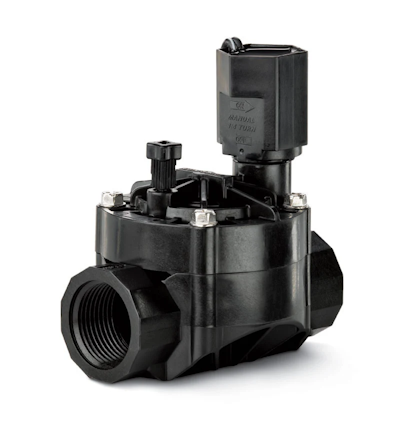
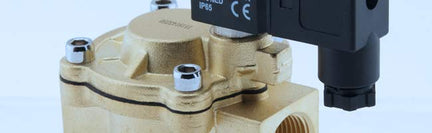
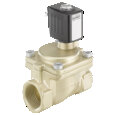
Figure 1: 2/2-way brass solenoid valve for irrigation
Irrigation solenoid valves control the start and stop of water flow to specific irrigation zones. They receive automated signals from a controller that allow for precise water distribution. The scheduled watering helps to reduce waste and ensure plants and grass get the right amount of water at the right time.
Table of contents
- What does an irrigation solenoid valve do?
- Where is an irrigation solenoid valve installed?
- How irrigation solenoid valves work in a system
- How to select an irrigation solenoid valve
- Why do irrigation solenoid valves fail?
- FAQs
View our online selection of products for automatic garden irrigation!
What does an irrigation solenoid valve do?
Solenoid valves are small, electrically controlled valves that turn water flow on and off in your irrigation system. They work together with your controller to manage when and where water flows.
Typically, 2-way solenoid valves are used, one for each watering zone. When the controller sends a signal to start watering, the valve opens and allows water to flow to that zone.
When the watering time ends, the valve closes to stop the flow. These valves enable you to automate your irrigation system, schedule zones, and prevent overwatering with sensors or smart controllers.
Why use solenoid valves for irrigation
Unlike manual valves, solenoid valves allow remote and automated control, eliminating the need for physical access. Compared to electric ball valves, solenoid valves open and close faster, cost less, and are better suited for multi-zone irrigation systems. While electric ball valves provide consistent but slower operation, they are more expensive and less practical for managing multiple zones efficiently.
Where is an irrigation solenoid valve installed?
In-line (installed directly in the horizontal water supply line) solenoid valves are widely used in residential and commercial irrigation systems, especially when a clean, underground setup is preferred. They are typically installed in valve boxes, downstream of a backflow preventer and after the main supply line, with one valve per irrigation zone.
In-line solenoid valves offer better protection in cold climates (when buried below the frost line), and are ideal for multi-zone systems. Maintenance may require opening a valve box, but their concealed location protects them from weather and damage.
How irrigation solenoid valves work in a system
Solenoid valves connect to an irrigation controller, which is usually mounted on an exterior wall or in a garage. The irrigation controller manages the watering schedule.
- Each solenoid valve connects to the irrigation controller via low-voltage wiring. One wire per valve goes to its terminal, and a common wire completes the circuit.
- When the controller sends a signal (typically 24V AC or 9V DC), the solenoid activates, lifting the plunger to open the valve and allow water flow. Once the signal stops, the plunger drops, closing the valve.
- Water flows from the main line, typically through a master valve, then through the active zone valve to the lateral pipes feeding sprinklers or drip emitters. A master valve helps reduce pressure and protect the system.
- Pressure regulators are installed upstream if the supply pressure exceeds 10.3 to 14 bar (150-200 psi). Filters before the valves remove debris to prevent internal damage.
How to select an irrigation solenoid valve
Rain Bird solenoid valves are a standard choice for irrigation. They are available in 24V AC, which matches most common irrigation controllers.
Table 1: Standard irrigation solenoid valve configuration
| Parameter | Standard choice | Reason |
| Configuration | 2-way | Used to open or close a single water line—standard for controlling irrigation zones. |
| Operation | Normally closed (NC) | Safest choice: remains closed without power, preventing water loss during power outages or controller failures. |
| Housing Material | Plastic | Durable, rust-resistant, and cost-effective for residential and light commercial applications. |
| Seal Material | NBR (Nitrile Rubber) | Reliable for clean, ambient-temperature water. |
| Connection Type | Threaded | Easy to install and service; fits standard pipe sizes. |
| Actuation Type | Indirect-acting | Handles typical irrigation pressures (2-5.5 bar / 30-80 psi) efficiently and supports high flow rates. |
| Electrical | 24 V AC | Industry standard for wired irrigation controllers. |
Table 2: Alternative options for irrigation solenoid valves
| Requirement | Alternative option | Reason |
| Switching between two water sources | 3-way valve | Allows flow diversion for fertigation or dual-source systems. |
| Flow during power failure | Normally open valve | Keeps water running in critical or fail-safe applications. |
| Higher mechanical strength | Brass body | Withstands impact or slightly higher pressures. |
| Corrosion or chemical resistance | Stainless steel body / EPDM seal | Ideal for saline or chemically treated water. |
| Permanent PVC joints | Glued sleeve connection | Creates leak-proof, permanent joints under 7 bar (100 psi). |
| Battery-powered control | 9 V DC solenoid | Used in wireless or remote irrigation systems. |
Why do irrigation solenoid valves fail?
Solenoid valve issues in irrigation systems typically involve the valve not opening or closing, leaking, or overheating. These problems can cause sprinklers to behave erratically and may indicate a faulty valve. Key causes include:
-
Incorrect voltage: Excessive voltage can cause the coil to burn out.
- Ensure the valve's voltage rating matches the system's output, and use surge protection to prevent damage from voltage spikes.
-
Water exposure: Moisture can short-circuit the coil.
- Protect electrical connections with a proper DIN connector.
- Use a high-quality valve box to dry valves, especially outdoors.
- Select valves with an appropriate IP rating, such as IP65 or higher, for use in outdoor or wet environments.
-
Sediment buildup: Sediment can cause overheating and damage the coil. The valve can also get stuck in its open or closed position due to a buildup.
- Use an upstream filter and install valves vertically to prevent sediment buildup.
- Disassemble and clean the valve periodically.
-
Excessive water pressure: Pressure exceeding the valve's capacity can cause the pipes to burst or the valve to leak.
- Verify the valve pressure ratings before installation. Install a pressure regulator upstream of the solenoid valve.
-
Worn out parts:Leaks can result from worn o-rings or seals, excessive pressure, cracked valve bodies, or blocked lines.
- Solenoid valve components are usually replaceable, making repairs more cost-effective than replacing the entire valve. The whole valve should only be replaced if the body is cracked.
How to tell if a sprinkler valve solenoid is bad
Use a multimeter to verify if the solenoid is receiving the correct voltage. If there’s no power, the issue lies in the controller, wiring, or connections. If power is present but the valve doesn’t operate, remove the solenoid and turn the flow control stem manually. If water flows, replace the solenoid coil; if not, check for internal valve damage.
Table 1: Common irrigation solenoid valve problems and solutions
| Problem | Possible cause | Solution |
| Valve won’t open |
|
|
| Valve won’t close |
|
|
| Continuous leaks |
|
|
FAQs
What causes sprinkler solenoid valves to malfunction?
Malfunctions often arise from incorrect voltage, water exposure, sediment buildup, excessive pressure, or temperature extremes.
How does an irrigation control valve optimize water usage?
It regulates water flow to specific zones based on programmed schedules, ensuring efficient and targeted irrigation.
What maintenance is required for an irrigation control valve?
Regularly check for leaks, clean filters, and secure electrical connections to maintain optimal performance.


